Automatic Duration Calculation
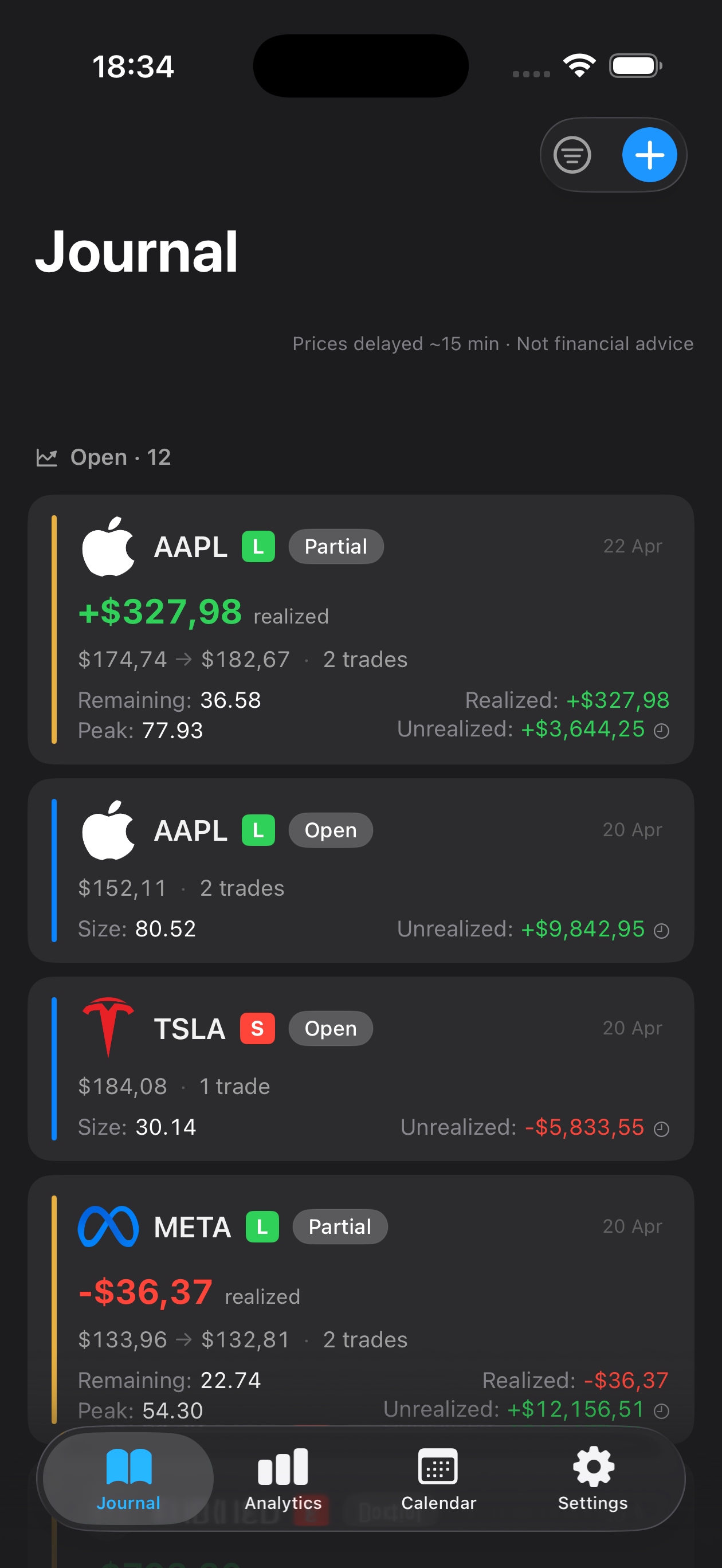
Log your entry time and exit time directly in Mantis. The app calculates holding duration instantly, removing manual math and ensuring accuracy across every trade in your journal.
Holding time—the duration between entry and exit of a trade—is a critical metric for understanding your trading patterns. Traders often discover that their best decisions cluster around specific time windows, while rushed exits or overextended holds correlate with losses. By consistently recording holding time in your journal, you build data to identify whether your strategy thrives on quick scalps, swing trades, or longer positions. This insight helps you align future trades with your actual edge, rather than guessing at what works.
Opens the App Store
Log your entry time and exit time directly in Mantis. The app calculates holding duration instantly, removing manual math and ensuring accuracy across every trade in your journal.
Search and filter past trades by holding time ranges. Compare outcomes across different hold durations to spot patterns—do your winners tend to close within hours, days, or weeks?
Tag or label trades by holding strategy (scalp, day trade, swing, position). Mantis lets you organize entries so you can review performance by time bucket and refine your approach.
All holding time records stay on your device. No syncing delays or cloud dependencies—your journal data is immediately available for review and analysis whenever you need it.
Record why you held as long as you did. Add notes about market conditions, patience tests, or exit triggers. Holding time data becomes richer when paired with your reasoning.
Holding time is the elapsed duration from when you open a trade position (entry) to when you close it (exit). It can be measured in minutes, hours, days, or weeks. Tracking it helps you see whether your trades align with your intended strategy and risk timeframe.
Win rate alone doesn't reveal the full picture. Two traders might both win 60% of trades, but one holds for 15 minutes and the other for 15 days. Holding time shows you how your strategy *actually behaves* and helps you understand capital efficiency and risk exposure over different periods.
Enter your trade's entry timestamp and exit timestamp in your journal entry. Mantis automatically calculates the holding duration. You can also add notes about whether the hold matched your plan or if emotions influenced your exit timing.
Yes. By reviewing your journal entries and noting market context (volatile days, low-volume periods, news events), you can filter and analyze which holding times worked best under specific conditions. This builds a more nuanced understanding of your edge.
Essentially, yes. 'Time in trade' and 'holding time' refer to the same metric—how long your capital was deployed in a specific position. Some traders distinguish between time from entry-to-exit versus actual hours the market was open, so consider which definition fits your analysis.
Important: Mantis is a trading journal and analytics tool. This page is not investment advice, not financial advice, and not a recommendation to buy or sell any security or instrument. Trading involves risk; past performance does not guarantee future results. Consult a qualified professional before making financial decisions.