iOS trading journal
← Trading terms glossary

What Is Expectancy?

Expectancy is the average amount you win or lose per trade over the long term, expressed as a dollar amount or percentage of your risk. It combines your win rate, average win size, and average loss size into a single metric. Traders pay attention to expectancy because a positive expectancy—even a small one—is the foundation of a profitable trading system.

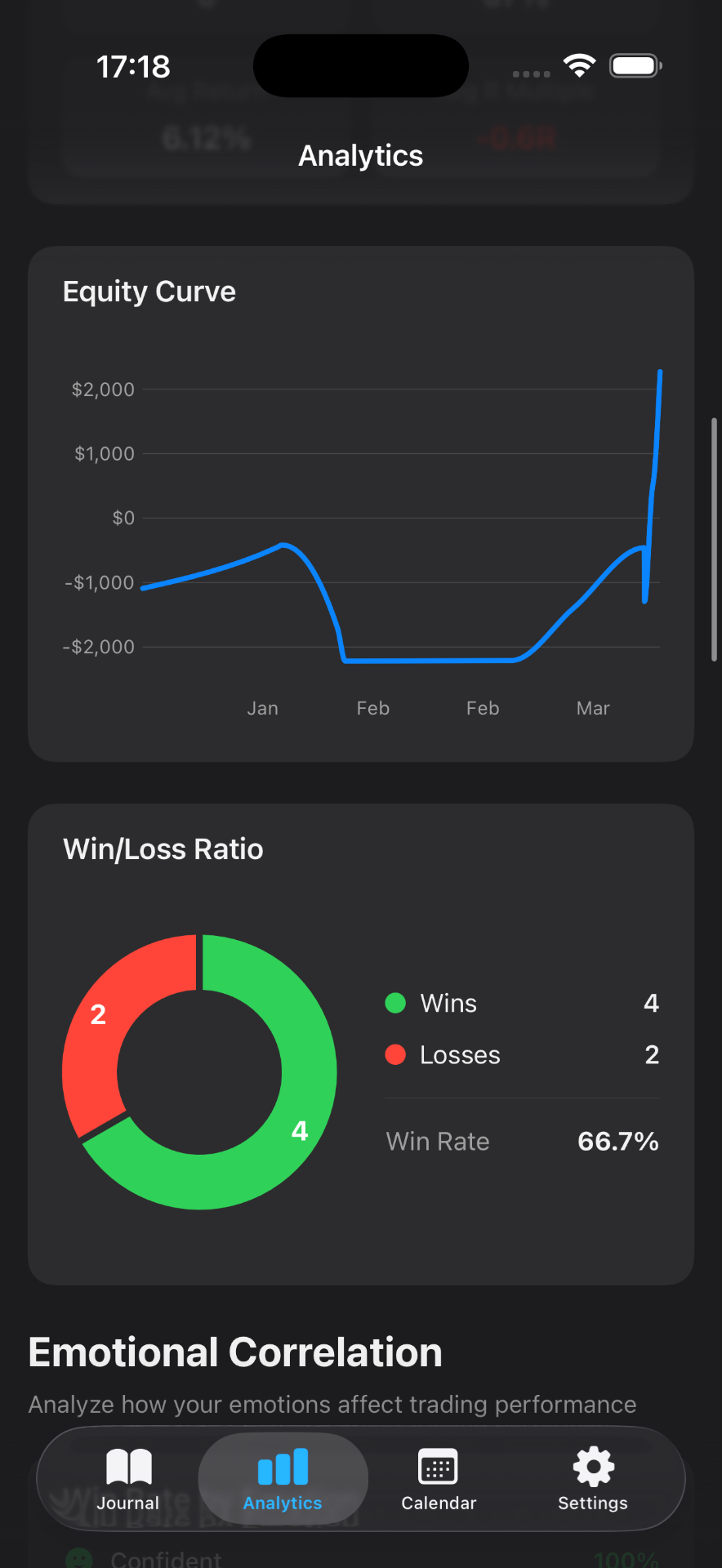
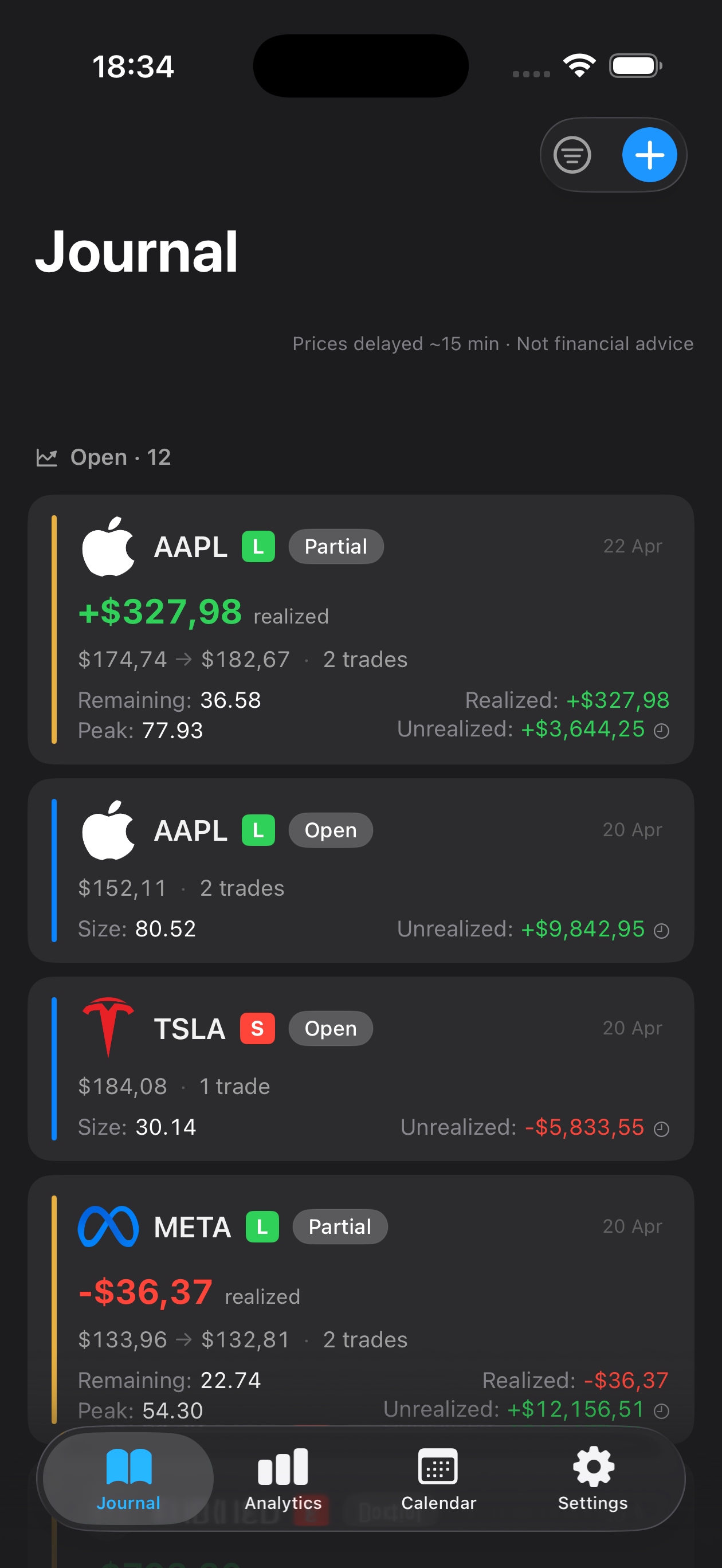
Mantis equity curve and win/loss charts used to review expectancy performance Mantis trading journal on iPhone — the trade log Mantis uses to calculate expectancy

Mantis tracks expectancy automatically — log each trade once and the number is calculated for you on iPhone.

Download on theApp Store

Opens the App Store

In a nutshell

The formula

Expectancy = (Win Rate × Average Win) − (Loss Rate × Average Loss) Or expressed as a ratio of money: Expectancy = (Probability of Win × Average $ Win) − (Probability of Loss × Average $ Loss) **Worked example:** Suppose you take 100 trades: - You win 40 trades, losing 60. - Your average winning trade is +$200. - Your average losing trade is −$100. Win Rate = 40 ÷ 100 = 0.40 (40%) Loss Rate = 60 ÷ 100 = 0.60 (60%) Expectancy = (0.40 × $200) − (0.60 × $100) Expectancy = $80 − $60 Expectancy = **+$20 per trade** Over 100 trades, you'd expect to profit $2,000 total (100 trades × $20). A positive expectancy means the system is profitable in theory; negative expectancy means it loses money over time.

Why it matters

Expectancy tells you whether your trading approach has a mathematical edge. It separates luck from skill: a single winning month means nothing, but a positive expectancy across hundreds of trades suggests your strategy actually works. However, expectancy has blind spots. It doesn't account for slippage, commissions, or psychological pressure that might cause you to deviate from your rules in real trading. It also assumes past performance repeats, which isn't guaranteed—market conditions change. A strategy with positive expectancy can still lose money in a bad streak or if you overtrade, take excessive risk, or fail to follow your plan.

What's a good expectancy?

There is no universal "good" expectancy—it depends on your market, strategy, and risk tolerance. **General benchmarks:** - **Negative expectancy:** The system loses money per trade over time. Not sustainable. - **Breakeven (near $0):** Theoretically profitable but too small to cover real-world costs (spreads, fees). Usually impractical. - **Small positive ($5–$50 per trade, or 0.5–2% of average trade risk):** Realistic and achievable for many traders. After accounting for slippage and commissions, it can be solid. - **Larger positive ($100+, or 5%+ of average risk):** Rare and requires either a high win rate, large average wins, or both. Common in backtests but harder to replicate live. **The honest answer:** A positive expectancy of $20–$30 per trade on a $100 risk is often healthier and more realistic than chasing 10% expectancy that vanishes under real-market friction. Focus on consistency and whether the edge survives slippage and fees.

Frequently asked questions

Is a higher expectancy always better?

Not necessarily. A strategy with $50 expectancy per trade taken 5 times a month might be less reliable than one with $20 expectancy taken 50 times. Also, expectancy calculated from a small sample (10–20 trades) is noisy; a lucky streak can inflate it. A modest, consistent positive expectancy across hundreds of trades is more trustworthy than a large expectancy from a few trades.

How is expectancy different from average profit per trade?

Expectancy is weighted by win/loss rates and sizes; average profit per trade is simply total profit divided by number of trades. If you have 10 wins of $100 and 90 losses of $10, your average profit is ($1,000 − $900) ÷ 100 = $1 per trade. But your expectancy is (0.10 × $100) − (0.90 × $10) = $10 − $9 = $1, which happens to be the same in this case. The formulas can give different insights depending on how you group and weight outcomes.

Can I calculate expectancy from my Mantis journal?

Yes. Export or review your trade history in Mantis, then tally your win count, loss count, average win size, and average loss size. Mantis stores all data locally on your device, so you have full access to your trade records. Plug those numbers into the expectancy formula. Many traders also use Mantis to track win rate and average risk per trade, which makes expectancy easier to compute.

What if my expectancy is positive in backtests but negative in live trading?

This is common. Reasons include: slippage and commissions eating into thin edges, psychological pressure causing you to exit winners early or hold losers too long, market conditions changing so the past pattern no longer works, or overfitting your rules to historical data. Expectancy is only valid if your live trading behavior matches your backtest assumptions.

Does positive expectancy guarantee I'll make money?

No. Expectancy is a long-term average; short-term variance is real. Even with +$20 expectancy per trade, you can have a 10-trade losing streak and lose money. You also need sufficient capital to survive drawdowns, correct position sizing, discipline to follow your plan, and enough trades for the law of large numbers to work. Positive expectancy is necessary but not sufficient.
Important: Mantis is a trading journal and analytics tool. This page is not investment advice, not financial advice, and not a recommendation to buy or sell any security or instrument. Trading involves risk; past performance does not guarantee future results. Consult a qualified professional before making financial decisions.