Record Entry & Exit Details
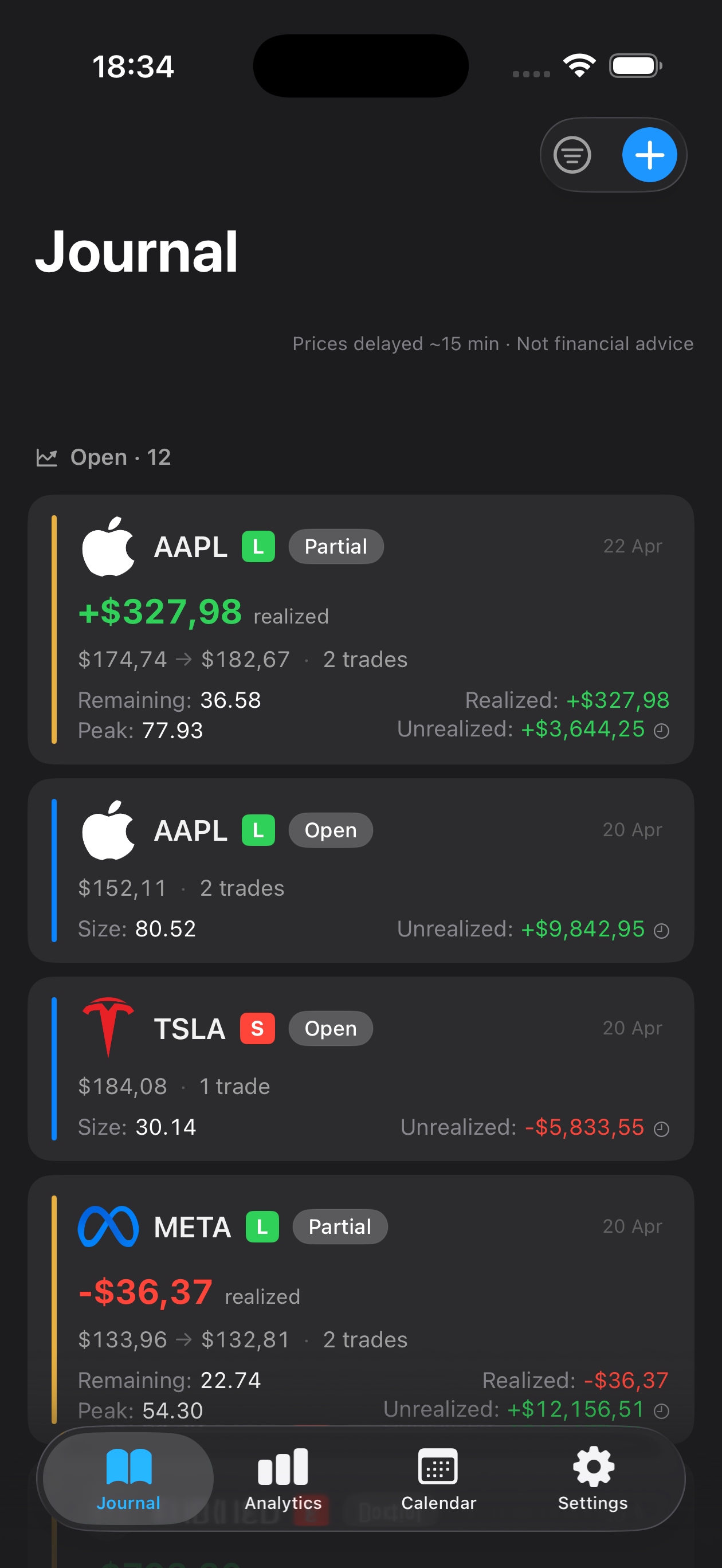
Log entry price, exit price, position size, and outcome for every trade. These details form the foundation of expectancy calculation—without accurate records, you cannot measure what your strategy truly produces.
Expectancy is the average profit or loss you can expect per trade over time—a metric that separates disciplined traders from those relying on luck. By systematically recording your trade outcomes and reviewing them in a journal, you uncover whether your strategy truly works, regardless of short-term wins or losses. Tracking expectancy reveals the edge hidden in your trades, helping you identify which setups, risk levels, and market conditions actually favor you. Mantis makes this process effortless by storing all your trade data locally on your device, so you can review patterns, calculate your average return per trade, and refine your approach with confidence.
New to expectancy? Read the definition, formula & example →
Opens the App Store
Log entry price, exit price, position size, and outcome for every trade. These details form the foundation of expectancy calculation—without accurate records, you cannot measure what your strategy truly produces.
Tag trades by setup type, timeframe, or market condition. This lets you compare expectancy across different trade categories, revealing which patterns deliver consistent returns.
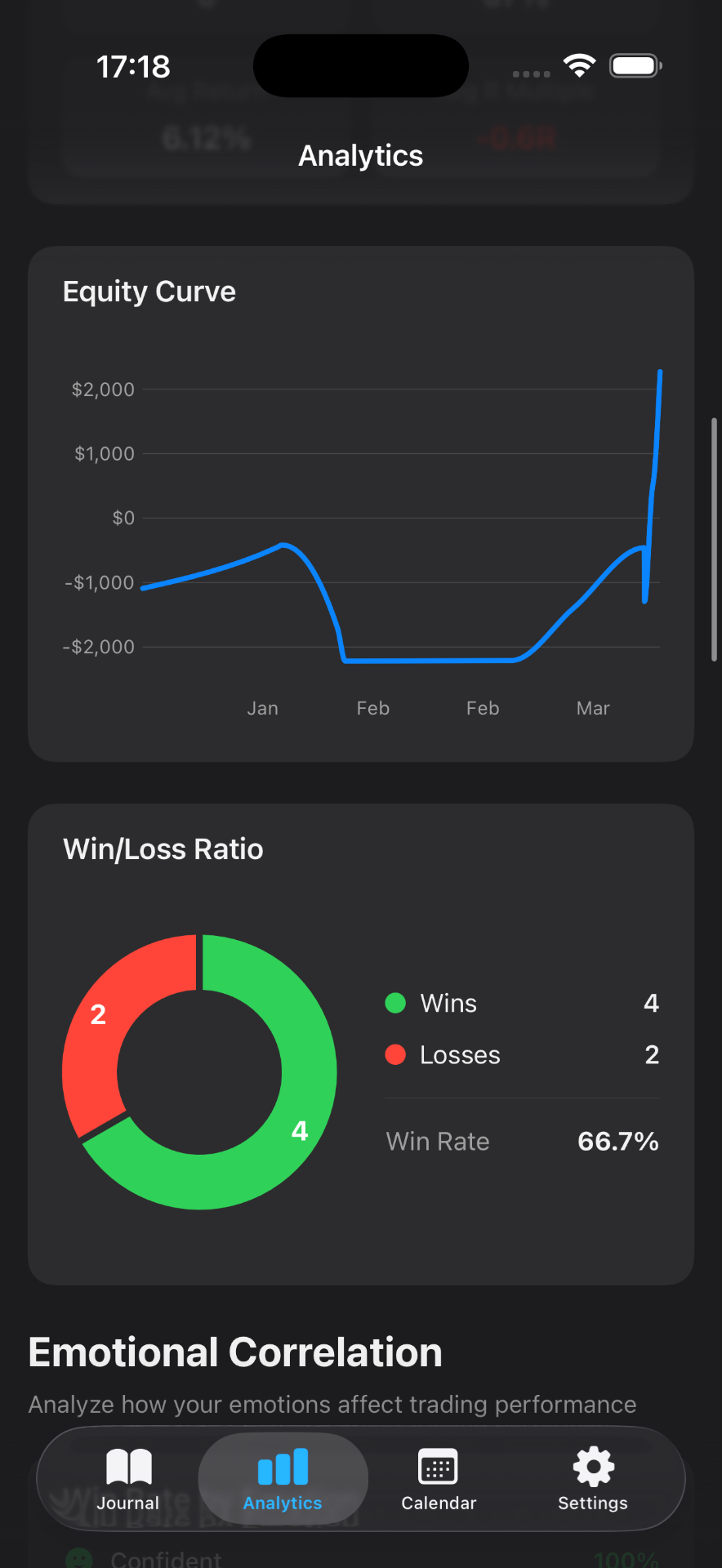
See your win rate (percentage of profitable trades) and average profit per trade at a glance. Together, these numbers form the backbone of expectancy and show whether your wins outweigh your losses.
Record your intended risk and reward for each trade. Over time, this reveals whether you are capturing the risk-reward edge you planned, or if execution gaps are eroding your edge.
All your trade data stays on your device. You maintain complete privacy and control, with no cloud accounts or external logins needed to review your journal and calculate expectancy.
Expectancy is the average profit or loss per trade you can expect from your strategy over many trades. It matters because it shows whether your approach has a real edge—a positive expectancy means you profit on average, while a negative expectancy means you lose money systematically. A single trade tells you nothing; expectancy emerges only from disciplined record-keeping over dozens or hundreds of trades.
Expectancy = (Win Rate × Average Win) − (Loss Rate × Average Loss). For example, if you win 55% of trades averaging $500 per win, and lose 45% averaging $400 per loss, your expectancy is (0.55 × $500) − (0.45 × $400) = $275 − $180 = $95 per trade. Mantis stores your entry, exit, and outcome data so you can review these figures easily.
At least 30–50 trades is a reasonable minimum to see a pattern, but 100+ trades gives much stronger confidence. Early on, luck and variance can distort your results. The longer and more consistently you journal, the clearer your true expectancy becomes.
Both. Your overall expectancy shows your general edge, but comparing expectancy by setup type, timeframe, or market condition reveals which approaches work best for you. Some traders find their edge only in specific setups—journaling lets you discover that, rather than guessing.
Expectancy shows your historical average, not a guarantee. If you have positive expectancy from a solid sample of trades, you have reason to believe your method will remain profitable—but markets change, and discipline matters. Journaling keeps you honest about whether you are actually following your plan and maintaining your edge.
Important: Mantis is a trading journal and analytics tool. This page is not investment advice, not financial advice, and not a recommendation to buy or sell any security or instrument. Trading involves risk; past performance does not guarantee future results. Consult a qualified professional before making financial decisions.