iOS trading journal
← Trading terms glossary

What Is R-multiple?

R-multiple is a measure of how many times your initial risk in a trade is paid back (or lost) by the profit or loss you actually make. It expresses the relationship between the amount of money you risked and the amount you gained or lost, making it easier to compare trades of different sizes on a common scale. Traders use R-multiple because it helps separate skill from luck and reveals whether a trading strategy is genuinely profitable over time.

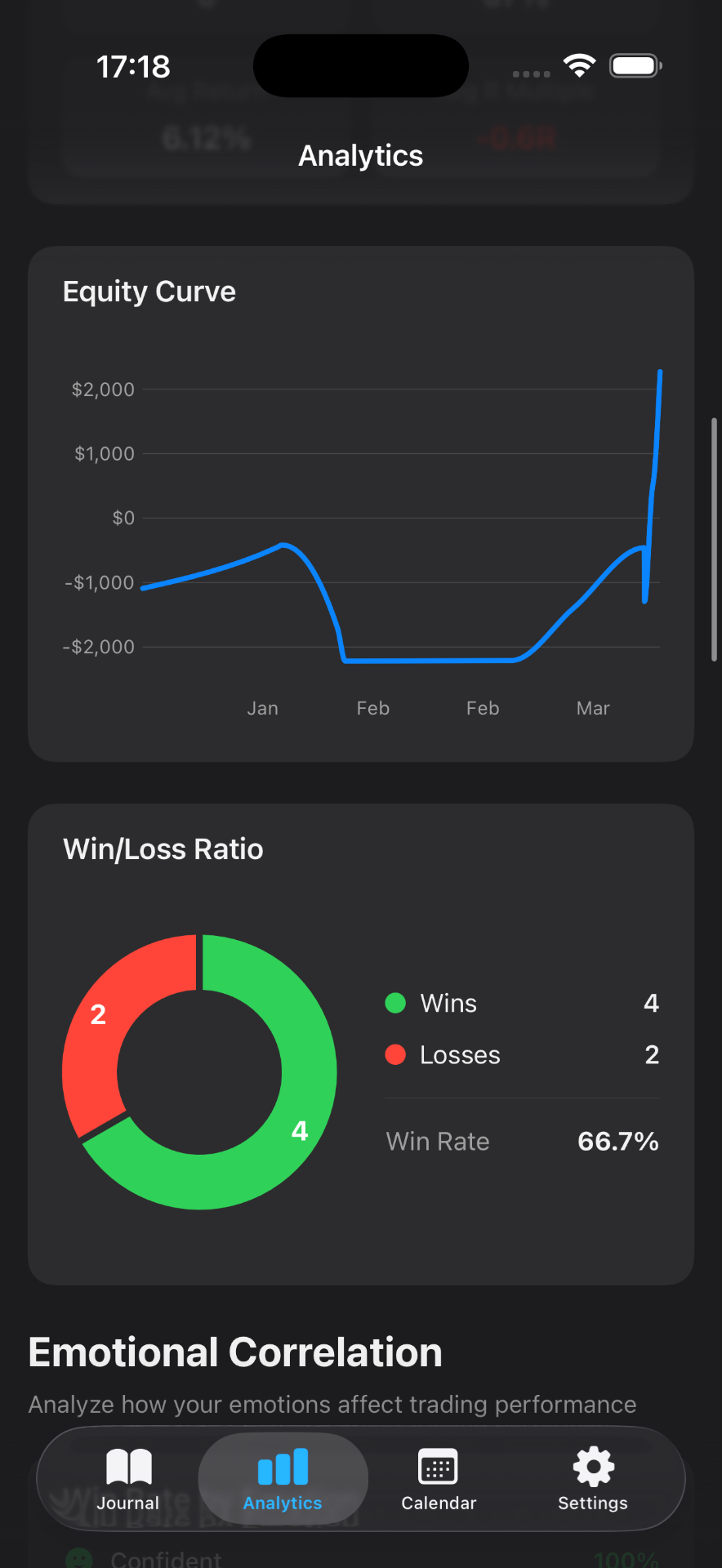
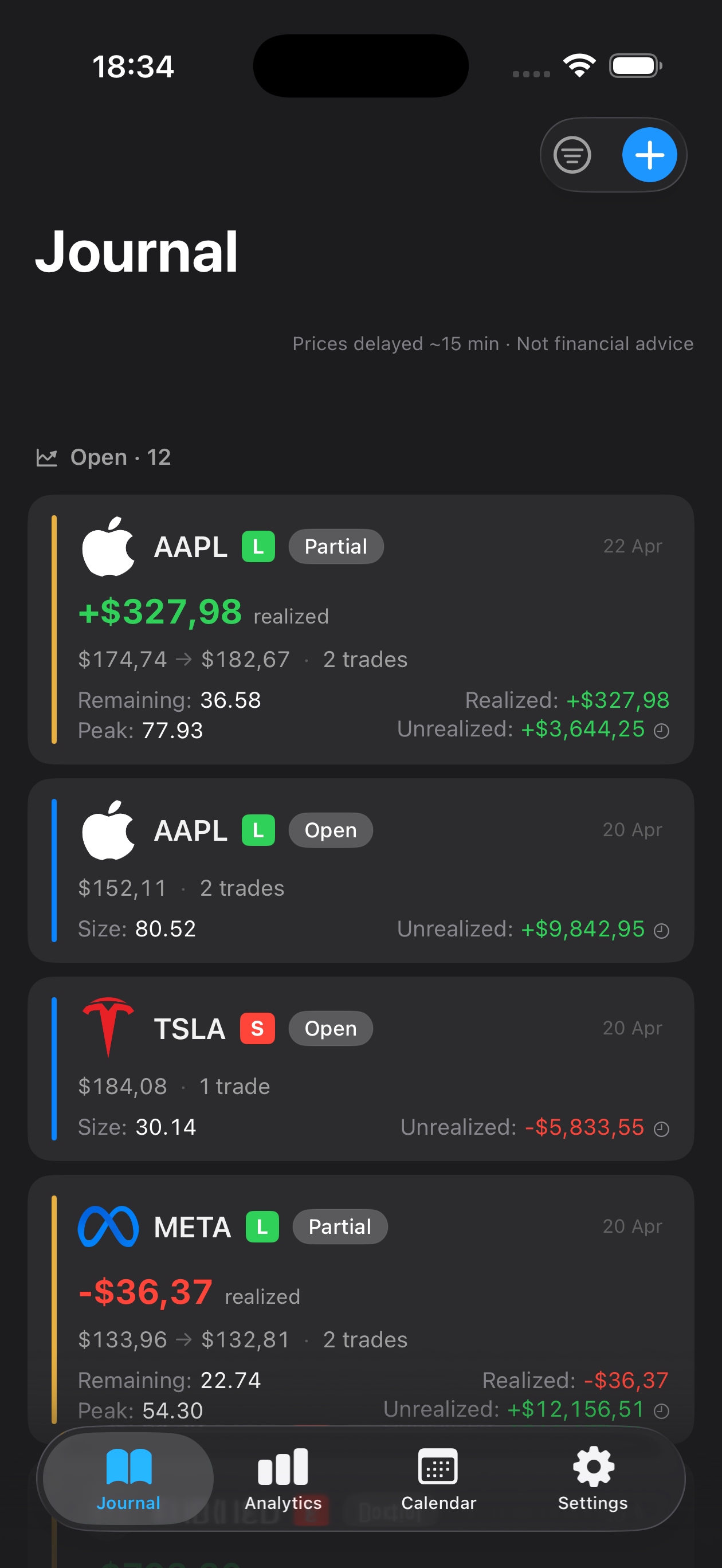
Mantis equity curve and win/loss charts used to review R-multiple performance Mantis trading journal on iPhone — the trade log Mantis uses to calculate R-multiple

Mantis tracks R-multiple automatically — log each trade once and the number is calculated for you on iPhone.

Download on theApp Store

Opens the App Store

In a nutshell

The formula

R-multiple is calculated as: (Profit or Loss) ÷ (Initial Risk per Trade). Initial risk is typically the distance from your entry price to your stop-loss price, converted to profit/loss in currency. Worked example: You enter a stock at $100 with a stop-loss at $95 (risking $5 per share). You hold 100 shares, so your total initial risk is $500. The trade closes with a profit of $1,500. Your R-multiple is $1,500 ÷ $500 = 3R. This means you made three times the amount you risked.

Why it matters

R-multiple removes the noise of position size and account size, letting you judge whether individual trades or your overall strategy have good odds. A trader who makes ten 2R wins and ten 1R losses has a positive expectancy, even though they lose as often as they win. However, R-multiple alone does not account for win rate, frequency, or the time your money is tied up. A single large R-multiple win cannot redeem a strategy with many small losses.

What's a good R-multiple?

A profitable strategy often aims for an average R-multiple of at least 1.5R to 2R per win, combined with a win rate high enough to make the math work. For example, a 50% win rate with 2R wins and 1R losses yields a positive expectancy. However, the 'right' target depends on your win rate, trade frequency, and market: a high-win-rate scalper may be happy with 0.5R wins, while a low-frequency swing trader might target 3R+ to justify fewer opportunities. There is no universal 'good' number—only what makes sense for your specific approach.

Frequently asked questions

Is a higher R-multiple always better?

Not necessarily. A single 5R winner does not prove a strategy works. What matters is the average R-multiple over many trades, balanced against your win rate. A trader with ten 5R wins and twenty 2R losses has made nothing. Focus on long-term expectancy, not individual trades.

How is R-multiple different from profit and loss in dollars?

Profit in dollars depends on position size and the prices you picked; R-multiple is normalized to show how many times your pre-defined risk you recouped. Two traders might each make $500, but one risked $100 (5R) and the other risked $500 (1R). R-multiple lets you compare their results fairly.

Can I have a negative R-multiple?

Yes. A negative R-multiple means you lost money on the trade. For example, if you risked $500 and lost $1,500, your R-multiple is −3R. Negative Rs are part of every strategy; the goal is to design one where your wins outweigh your losses over time.

Do I need to track R-multiple for every single trade?

It is helpful to record it, especially if you keep a trading journal. Over 20, 50, or 100 trades, the average R-multiple and win rate together show whether your method has an edge. A single trade's R-multiple is less meaningful.

What if my trade doesn't hit my stop-loss or target?

You still calculate R-multiple using your actual exit price. If you risked $500 but exited at a $300 loss, your R-multiple is −0.6R. This is normal and reflects real trading conditions where not every trade follows your plan exactly.
Important: Mantis is a trading journal and analytics tool. This page is not investment advice, not financial advice, and not a recommendation to buy or sell any security or instrument. Trading involves risk; past performance does not guarantee future results. Consult a qualified professional before making financial decisions.