iOS trading journal
← Trading terms glossary

What Is a Trading Journal?

A trading journal is a systematic record where traders document every trade they execute, along with the reasoning, emotions, and outcomes associated with each position. It typically includes entry and exit prices, position size, the rationale behind the trade, market conditions, and post-trade reflections on what went right or wrong. Traders maintain journals to identify patterns in their decision-making, measure performance objectively, and refine their strategy over time through deliberate self-analysis.

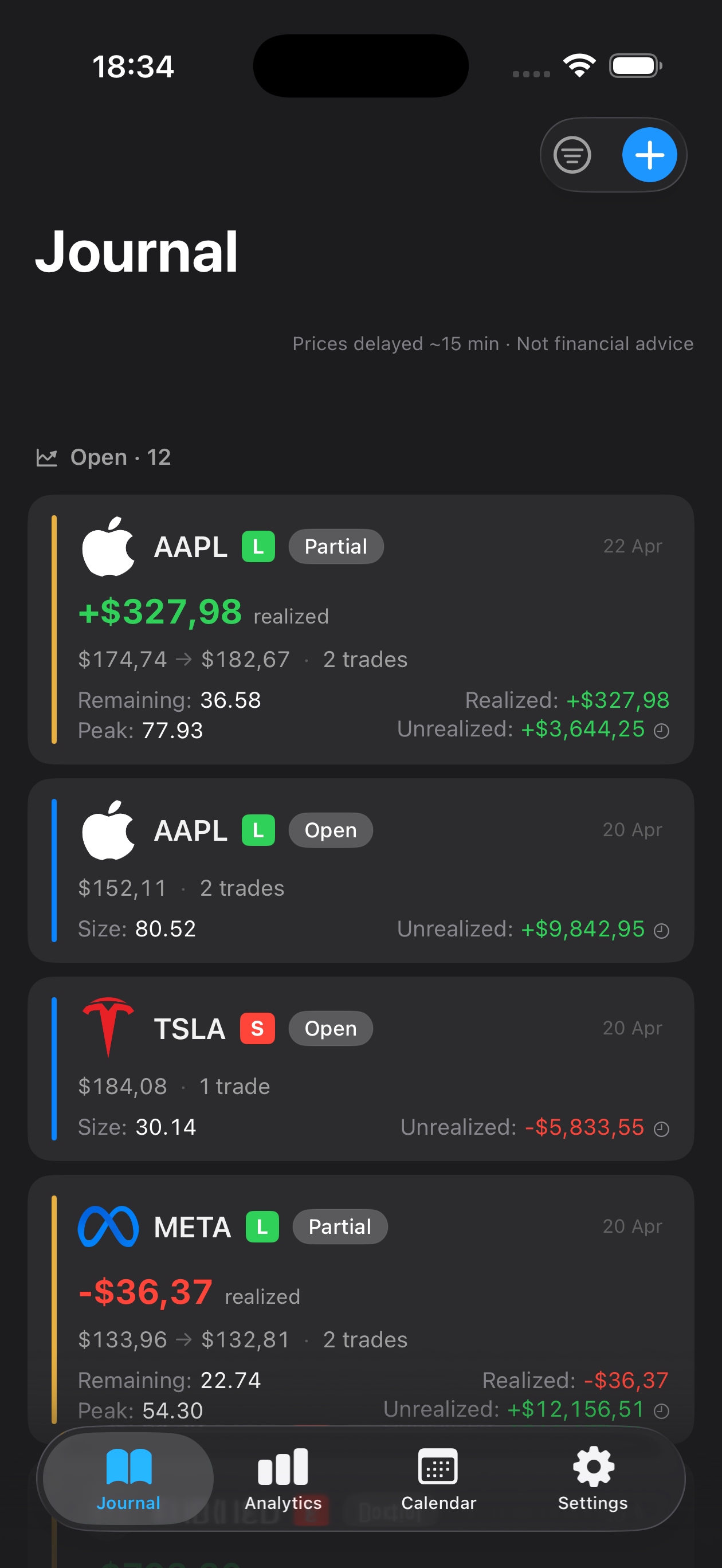
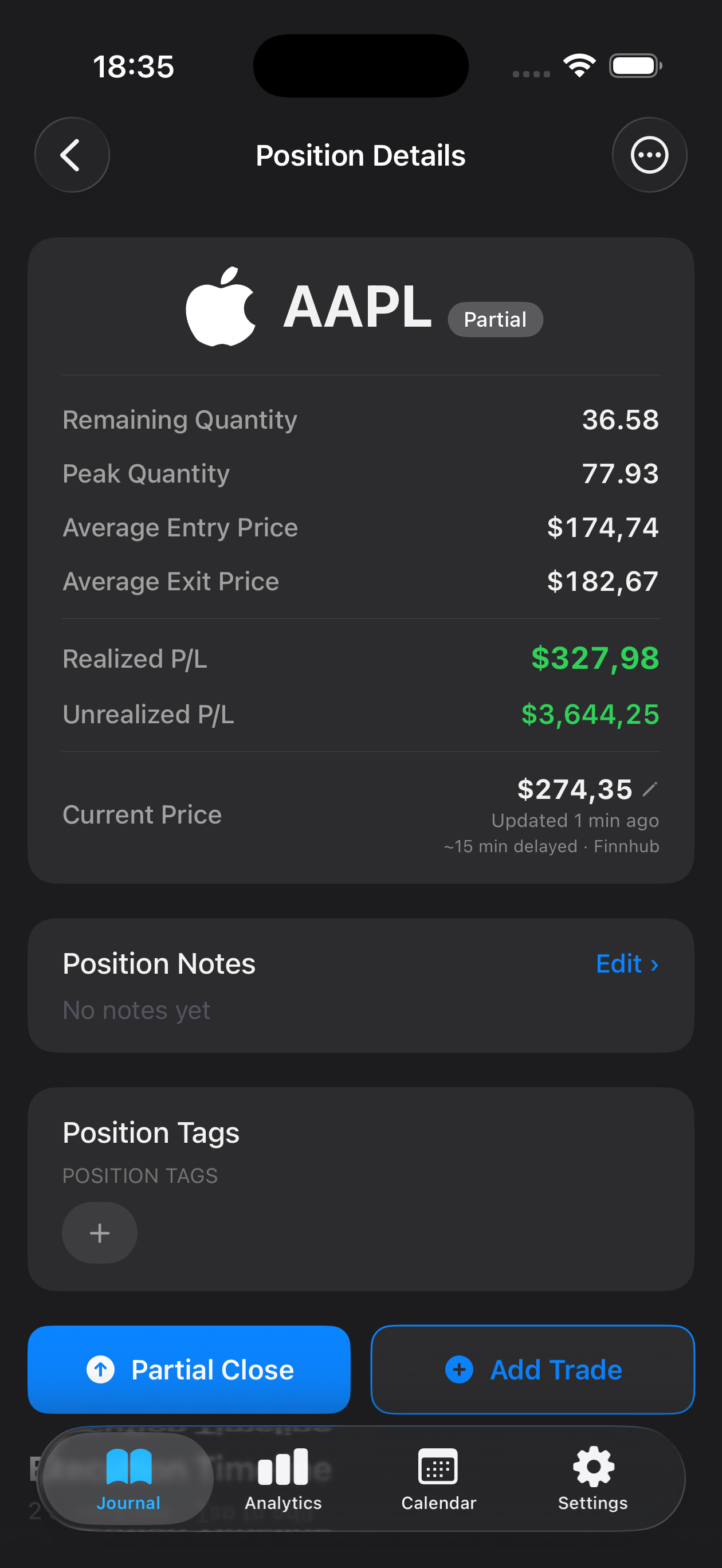
Mantis trading journal on iPhone — a trading journal with open positions and live P/L Mantis position details with execution timeline and R-multiple tracking for a logged trade

Mantis is a trading journal built for iPhone — log each trade in seconds and your stats are calculated for you automatically.

Download on theApp Store

Opens the App Store

In a nutshell

What goes in it

A complete trading journal captures both quantitative and qualitative data. On the numbers side: trade date and time, ticker symbol, entry price, exit price, position size, profit or loss, and fees paid. On the qualitative side: screenshots of charts, the setup or pattern you identified, your emotional state before and after the trade, whether you followed your rules, and what you learned. For example, if you bought 50 shares of AAPL at $150.00 and sold at $155.00, you'd record the $250 gross profit, but also note whether you stuck to your planned exit or got greedy and held too long. This blend of hard data and honest reflection is what makes a journal powerful for improvement.

Why it matters

A trading journal turns vague feelings into measurable insights. Without one, you might remember your winners and forget your losers, leading to overconfidence. The journal shows you your actual win rate, your average gain versus average loss, and which setups genuinely work for you versus which ones drain your account. It also reveals behavioral patterns—like overtrading on Mondays or revenge-trading after losses—that are invisible in the moment but clear when reviewing weeks of entries. Essentially, the journal is your feedback loop: it tells you whether your edge is real or imaginary.

What's a good trading journal?

A good trading journal is one you actually use consistently and that contains enough detail to drive improvement. Quality beats complexity: even a simple spreadsheet with date, symbol, P&L, and a one-sentence note beats an elaborate template you abandon after a week. The best journals include screenshots or charts so you can review your technical reasoning later, and they track both winning and losing trades without bias. There's no universal benchmark for how many fields to track—day traders might log dozens of trades daily with brief notes, while swing traders might write paragraph-long analyses for each position. The key measure of a good journal is whether reviewing it regularly leads to measurable changes in your trading behavior and results.

Frequently asked questions

Do I really need a trading journal if I'm just starting out?

Yes, especially if you're just starting out. Beginners often repeat the same mistakes without realizing it because emotions cloud memory. A journal from day one creates a factual record of what you actually did versus what you remember doing, helping you spot and correct bad habits before they become ingrained. It also builds the discipline of treating trading as a skill to improve, not a game of luck.

How is a trading journal different from a brokerage statement?

A brokerage statement shows your executed trades and account balance—the what and when—but not the why or how you felt. A trading journal adds context: your reasoning, the setup you saw, whether you followed your plan, and what you learned. The statement is a receipt; the journal is a learning tool. You need both: the statement for tax records and performance stats, the journal for skill development.

Should I journal every single trade or just the important ones?

Journal every trade if possible. Small trades reveal patterns too—overtrading, impulsive entries, or a tendency to ignore your rules on 'throwaway' positions. If logging every trade feels overwhelming, commit to at minimum recording every trade's basic stats (entry, exit, P&L) and writing detailed notes on your biggest wins and losses, plus any trade where you broke your rules. Consistency matters more than perfection.

What should I do with my journal entries after I write them?

Review them regularly—weekly or monthly—to spot recurring themes. Look for patterns: which setups have the highest win rate? Do you perform worse after a losing streak? Are you taking profits too early or holding losers too long? Use these insights to adjust your strategy and rules. The journal only helps if you actually analyze it; otherwise it's just a diary. Many traders schedule a weekly review session to read through the past week's trades and write down one or two actionable changes.

Can I keep my trading journal digitally or does it need to be on paper?

Digital or paper both work—choose whichever you'll actually use. Digital journals (spreadsheets, apps, or dedicated software) make it easier to attach screenshots, calculate statistics automatically, and search past entries. Paper journals can feel more personal and force you to slow down and reflect while writing by hand. Many traders use a hybrid: quick digital logging for stats, then periodic handwritten reflections on bigger lessons. The medium matters far less than the habit of consistent, honest recording.
Important: Mantis is a trading journal and analytics tool. This page is not investment advice, not financial advice, and not a recommendation to buy or sell any security or instrument. Trading involves risk; past performance does not guarantee future results. Consult a qualified professional before making financial decisions.