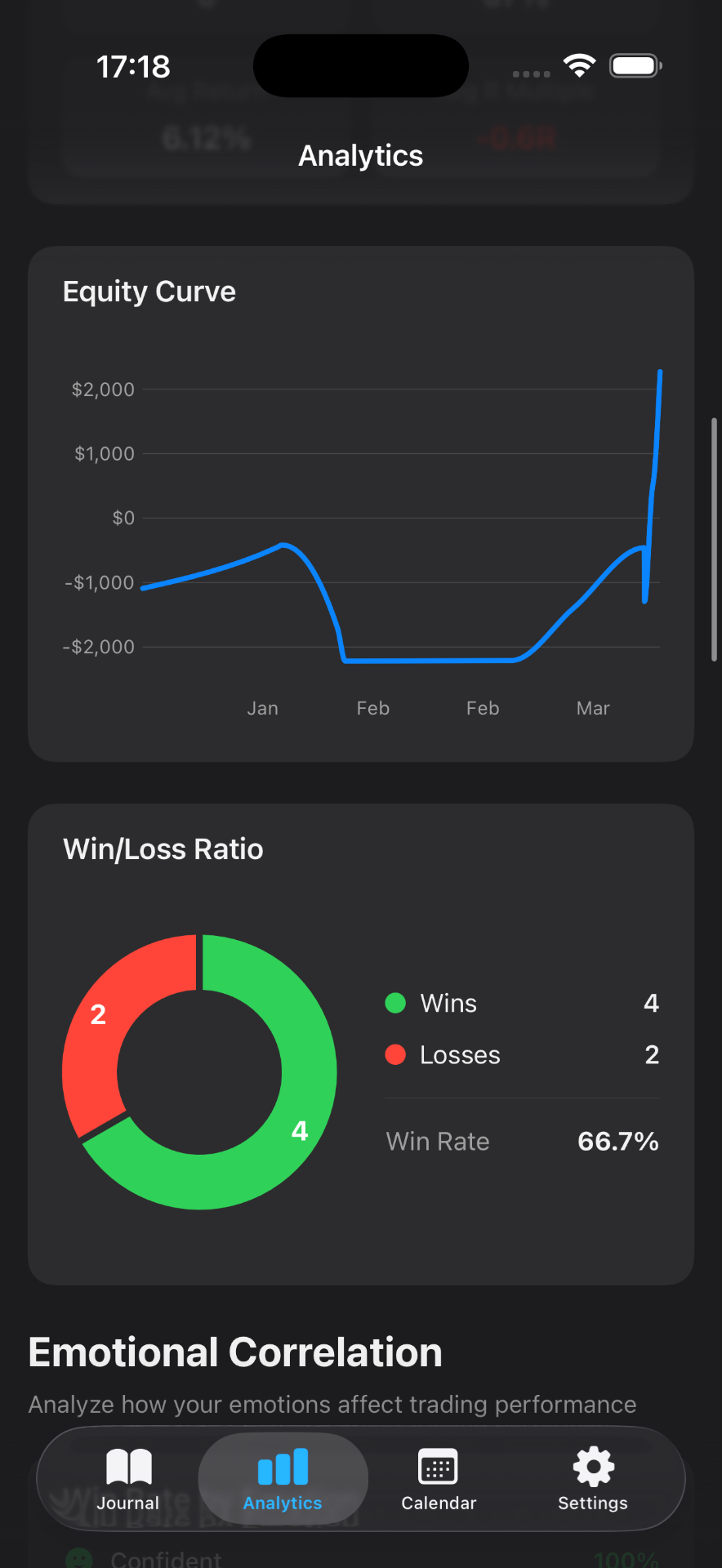
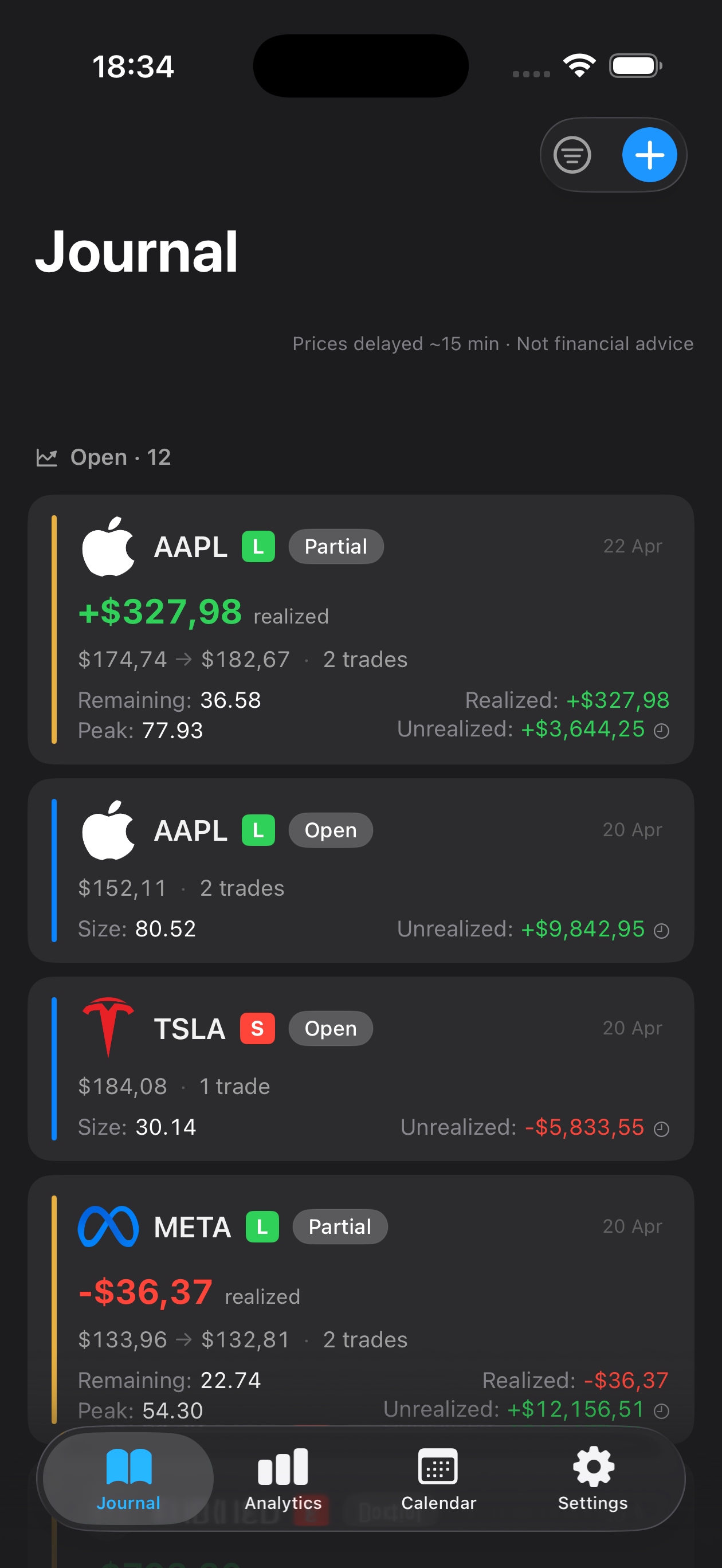
Understanding correlation in your trading journal reveals hidden relationships between your trades and market conditions. When you systematically record which assets moved together during your entries and exits, you uncover patterns that inform position sizing, diversification, and risk management. A disciplined correlation log transforms raw trade data into actionable insights—helping you spot when your portfolio clustering exposes you to hidden risks or when correlation breakdowns create unexpected losses. By tracking this metric consistently in Mantis, you build a data-backed foundation for more intentional trade selection.
Log which assets you traded alongside one another and note whether they moved in sync or diverged. Mantis lets you add custom fields to capture correlation observations during or immediately after each trade, ensuring accuracy before details fade.
Tag trades by market regime and conditions
Label entries with correlation regimes—normal, stress, or decorrelation periods—so you can filter and review how your decisions performed under different market dynamics. This context clarifies whether your edge holds across varying environments.
Review correlation clusters over time
Use Mantis's local journaling to scroll through your trade history and identify periods when correlation assumptions broke down. Compare your expected correlations against actual outcomes to refine future position construction.
Isolate correlation-driven losses
Filter trades by the correlation thesis you entered and measure how often positions moved as expected. This reveals whether your correlation estimates were realistic or overly optimistic, informing risk adjustments.
Store all data locally, always accessible
Mantis keeps your correlation notes and trade records on your device only—no cloud dependency, no syncing delays. Your journal remains private and instantly available for quick reference during market hours.
Frequently asked questions
What exactly is correlation in trading?
Correlation measures how two or more assets move relative to each other—ranging from +1 (perfectly synchronized) to −1 (perfectly opposite). In a trading journal, tracking correlation helps you understand whether your portfolio positions are truly diversified or whether hidden linkages amplify risk during market stress.
Why should I log correlation in a journal instead of calculating it afterward?
Your *expected* correlation at entry time is just as important as the *realized* correlation. By noting your correlation assumptions when you open a trade, you create a benchmark to review later. This discipline reveals whether your market intuition was sound or biased, improving future decisions.
How do I consistently record correlation data?
Create a simple template in Mantis: note the primary asset, list any correlated positions open at entry, estimate the correlation direction (moving together, diverging, or uncorrelated), and add any market conditions affecting that relationship. Keep entries brief but specific so you can scan them quickly during review.
What should I look for when reviewing correlation entries?
Review periods when correlation assumptions broke down—trades where you expected assets to move together but they diverged, or vice versa. Tally how often your correlation thesis was correct versus wrong. This win rate informs whether you should adjust position sizing, diversification strategy, or entry timing in similar market conditions.
Does Mantis sync my correlation logs to the cloud?
No. Mantis stores all your journal data locally on your device only. You control your records entirely—no cloud backup, no external access, no syncing delays. This keeps your trading journal private and ensures it's always available on your phone without internet dependency.
Important: Mantis is a trading journal and analytics tool. This page is not investment advice, not financial advice, and not a recommendation to buy or sell any security or instrument. Trading involves risk; past performance does not guarantee future results. Consult a qualified professional before making financial decisions.