How to Track Sortino Ratio in Your Trading Journal
The Sortino ratio refines risk measurement by focusing only on downside volatility—the losses that matter most to traders. Unlike metrics that penalize all price swings equally, Sortino isolates how efficiently your strategy navigates drawdowns relative to your target return. Tracking this metric in your trading journal helps you distinguish between strategies with similar returns: one that achieves them through steady, disciplined execution versus one that relies on lucky recovery from deep losses. By recording your trades consistently in Mantis, you build the historical data needed to calculate and review your Sortino ratio over time, turning raw trading activity into actionable insight about your risk management.
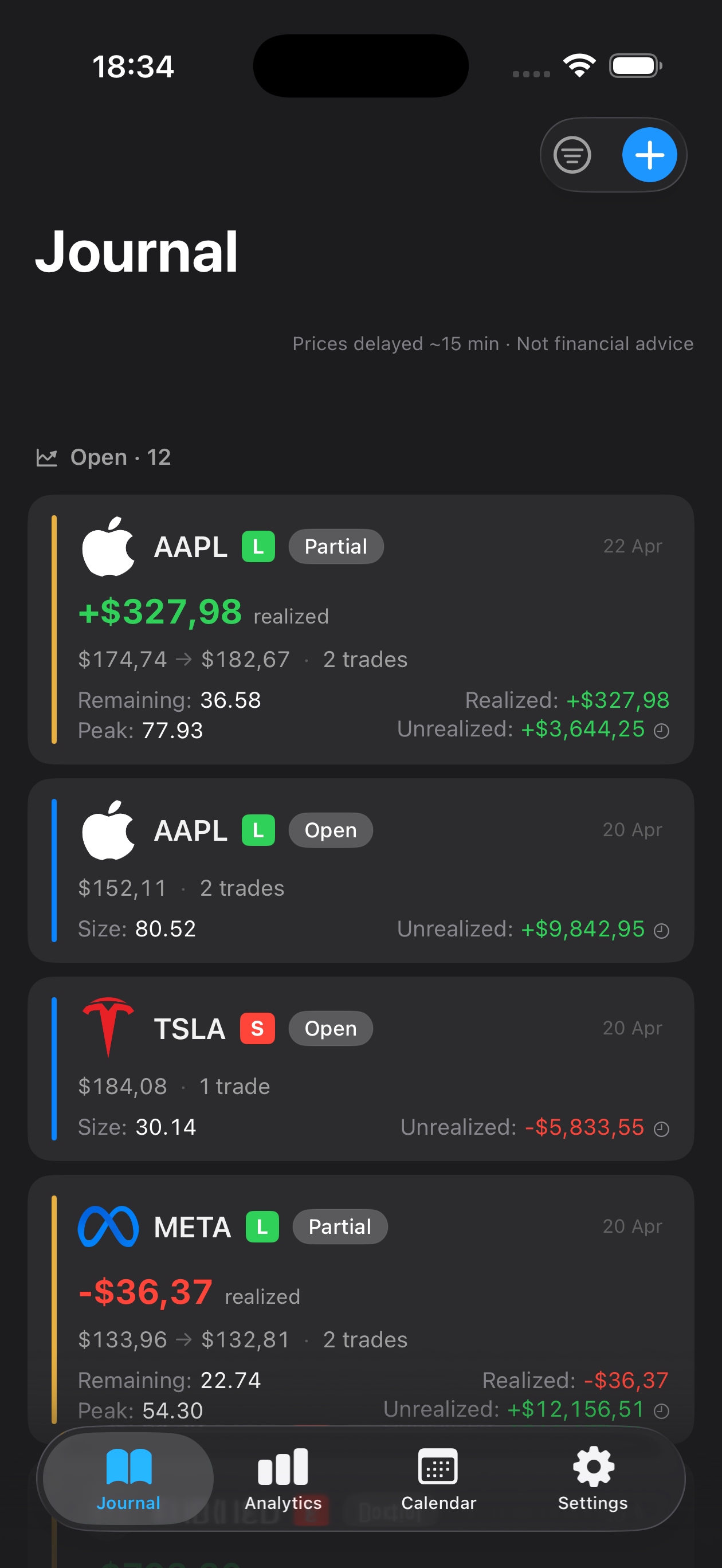
Mantis lets you log trade details—entry price, exit price, position size, and outcome—all on your device. This complete record is the foundation for calculating downside deviation and returns over any period.
Review period performance and consistency
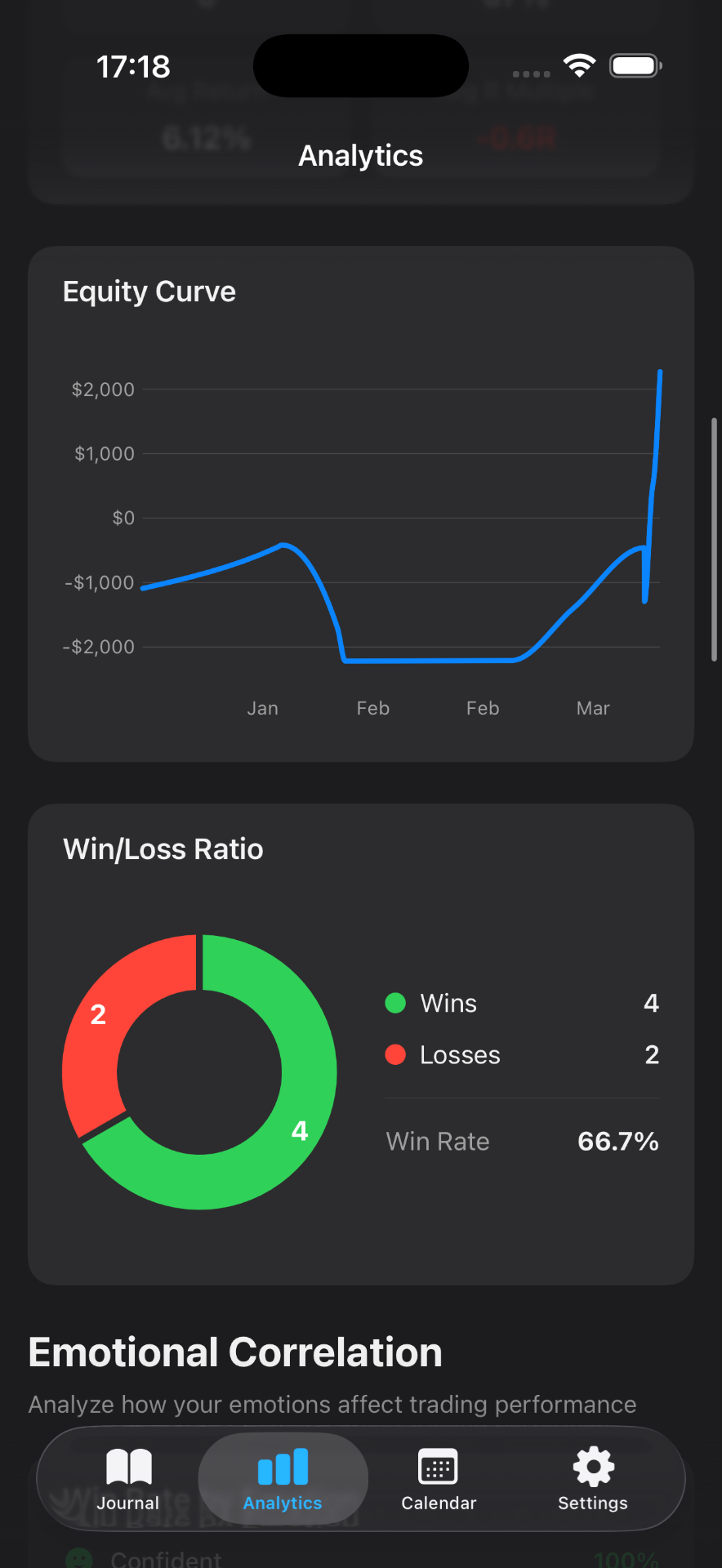
Filter and analyze your trades by date range or strategy tag. Sorting your historical trades helps you identify stable versus volatile performance periods and measure how your Sortino ratio changes as you refine your approach.
Track multiple strategies side by side
Label or categorize trades by strategy or market type. Comparing the Sortino ratio across different strategies reveals which of your approaches achieves returns with the least downside risk.
Local data ownership for privacy
All your trade data stays on your device—no cloud upload, no third-party servers. You maintain complete control and privacy over your trading journal while building the metrics that matter to you.
Frequently asked questions
What exactly is the Sortino ratio, and how does it differ from Sharpe ratio?
The Sortino ratio measures returns relative to <em>downside</em> volatility only—the variability of negative returns. The Sharpe ratio, by contrast, penalizes all volatility equally, both gains and losses. Sortino is often preferred by traders because it focuses on the risk you actually care about: avoiding losses below your target return.
Why should I journal trades if I want to calculate Sortino ratio?
Calculating Sortino requires a complete record of your returns and their downside deviation over time. A journal like Mantis ensures you capture every trade, not just the memorable ones, giving you an accurate dataset. Without consistent journaling, you risk misleading calculations based on incomplete or cherry-picked data.
What's a 'good' Sortino ratio?
Sortino ratios above 1.0 generally indicate positive downside-adjusted returns; ratios above 2.0 are considered strong. However, what's 'good' depends on your market, strategy, and risk tolerance. The real value is in tracking <em>your</em> ratio over time to see if your trading discipline improves or if changes to your approach increase or decrease risk-adjusted performance.
How often should I review my Sortino ratio?
Review your Sortino ratio regularly—monthly or quarterly—once you have enough trades to draw meaningful conclusions (typically 20–30+ trades per period). Too few trades can produce noisy, unreliable metrics. Consistent journaling in Mantis ensures you always have clean data ready for analysis.
Does Mantis calculate Sortino ratio automatically?
Mantis is a trading journal that captures your trade data locally on your device. While it provides trade statistics and performance summaries, you can export your data and calculate Sortino ratio using a spreadsheet or external analytics tool. The key is that Mantis provides the accurate, organized trade log you need as input.
Important: Mantis is a trading journal and analytics tool. This page is not investment advice, not financial advice, and not a recommendation to buy or sell any security or instrument. Trading involves risk; past performance does not guarantee future results. Consult a qualified professional before making financial decisions.